Graphic Design and Illustration.

Heidelberg Man – A Portait

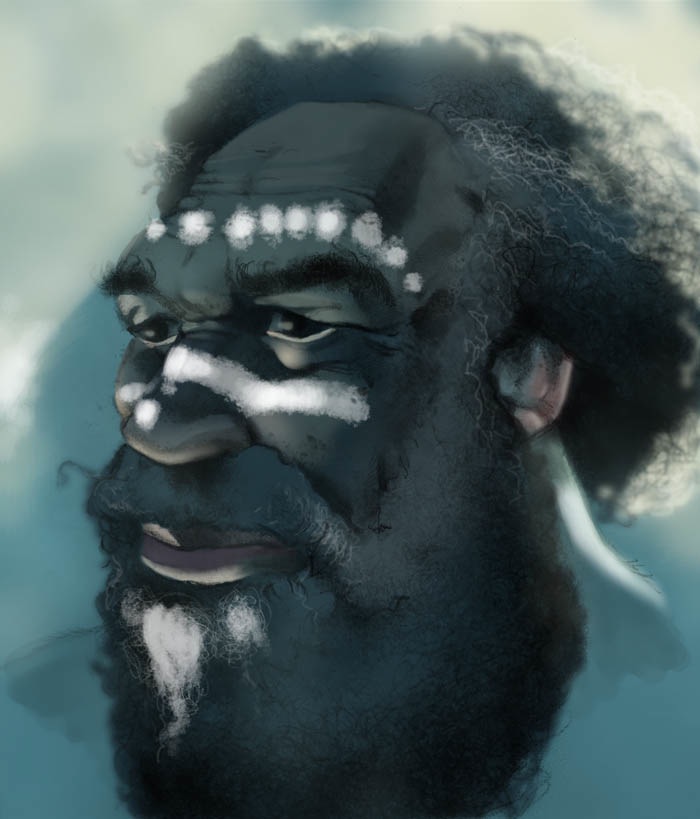
Out of the mists of time a piercing gaze of an ancestor long dead.

This guy is my loose interpretation of Heidelberg Man. An early forerunner of Homo Sapiens that many believe is the direct link between us and the Neanderthals. Not much is known about them. They were on average quite tall. Maybe a bit taller than modern humans, though I understand there‘s been some specimens found in South Africa that are quite huge. And while they still have a sloping forehead, their brian size does fit into the smaller end of the normal human range.

What inspired this image and the Neanderthal I drew earlier is a fascinating book I picked up at the bookstore, Evolution The Human Story by Dr Alice Roberts. It has a great many really cool reconstructions by the artists of Adrie and Alfons Kennis. I strongly urge any interested to check out their stuff. Amazing work!

Anyways, my guy is based on the Heidelberg Man found in the book, but not quite as harsh looking. I wanted a more contemplative pose, possible from a shaman or tribal elder (assuming they had such things). Started off a a pencil sketch and colour finished in Photoshop. The colour scheme was quite difficult to work out and took several tries before I settled on anything. Added some tribal markings afterwards just for fun.

Enjoy.

The anatomy of a designer

Image scanned from some really old reference material I inherited from my grandfather.
Source unknown. Circa the 1930s or 40s.

What makes for a truly great graphic designer?

Lots of ink and pixels have been put to task describing what makes a good designer.
Is is artistic ability? It does help, but no.

Technical skill? Also helpful, but sadly, some of the most design-y designers I’ve known usually run into problems once the files are sent to printers or to web developers, so probably not. But as a sometime production artist, I sometimes think it should be.

Ability to pull off wearing sandals in meetings and drink Starbucks’ rotgut coffee by the gallon? Nope, that belongs to fine artists, not commercial ones.

Knowing all the latest software? Implies there was no graphic design before 1984.

Ability to use “branding” and “analyitics” in general conversation? You’re thinking marketing people.

No, the two most important skills a designer must have are empathy and organization.

Now don’t get me wrong. Most of the other skills I mentioned are important, but these two skills I think make or break designers.

Part One – I feel your pain.

First off, empathy. Empathy? Yes, empathy. The ability to sense others emotions. To “walk a mile in someone’s shoes”. As a creative for hire, a designer may have to design for companies or products that the designer may not have any direct emotional attachment or response to. Can the young twenty-something designer create a piece that speaks to someone in their fifties? Can a woman design for a market that is primarily male? Or vise-versa? What about designing for a market that isn’t very media savvy or hip? While I’m not saying designers should prostitute themselves, they will have to be open-minded enough to realize that their own personal sense of style may be out of place depending on the audience the design is intended for.

Any advice that might help?

Doing lots of research can help. If you are finding that you’re designing for a target audience that you don’t quite fit into, or don’t understand well, you may have to do some investigating. Check out magazines and websites that all cater to this group. Check out the places they hang out in. And listen to your client. Do not be afraid to ask them good questions about their product or service and how it relates to their intended audience. If your client is any good at their job, they’ll know most of that already. Some clients though, might need some help in that department. That’s what a good cohesive team of marketing and creative professionals working together should be able to solve.

Once these things have been figured out, I find lots of thing just design themselves.

So know and understand your client and their audience. It can help stave off future arguments and get the designs rolling quicker.

The devil is in the details.

Organization. All really good designers should also be really well organized.

Over the balance of my career, I’ve either worked on a lot of really small projects or very large singular projects such as annual reports, financial statements, and catalogues. Either of these scenarios requires the ability to stay well organized. Killer design skills won’t help much if you are halfway through a 250 page catalogue and have no idea where half the images are coming from, or how many pages are still out for approval with the client. It’s also much nicer to say something other than, “Beats me,” when your boss asks you how much longer it’s going to be before a project is finished. Same thing applies if you are juggling a lot of smaller projects.

For me, it has become a learned skill. Not something that comes very naturally to me. But it pays big dividends if your boss knows you can be trusted with a big project. Your clients will respect it too.

I know if I was hiring and I had a choice between a really great designer, but a disorganized one, and a mediocre designer with really great organization skills, I’d sooner hire the organized one and try to get their design skills up to speed – often solved with experience and some mentorship – than trying to keep the hotshot under control.

I’d like to be able to recommend a few things like to do and project management software, but basic in and out trays and simple lists have worked well for me in the past. No expensive software needed. Though if you find yourself working in a large group spread out over geographic areas, software may be in order.

Any further thoughts and ideas? Want to complain that I wrote a post about good design and mentioned nothing about actual design? Chime in on the comments!

Webcomic – Curse of the Tiki Toki, Page 3

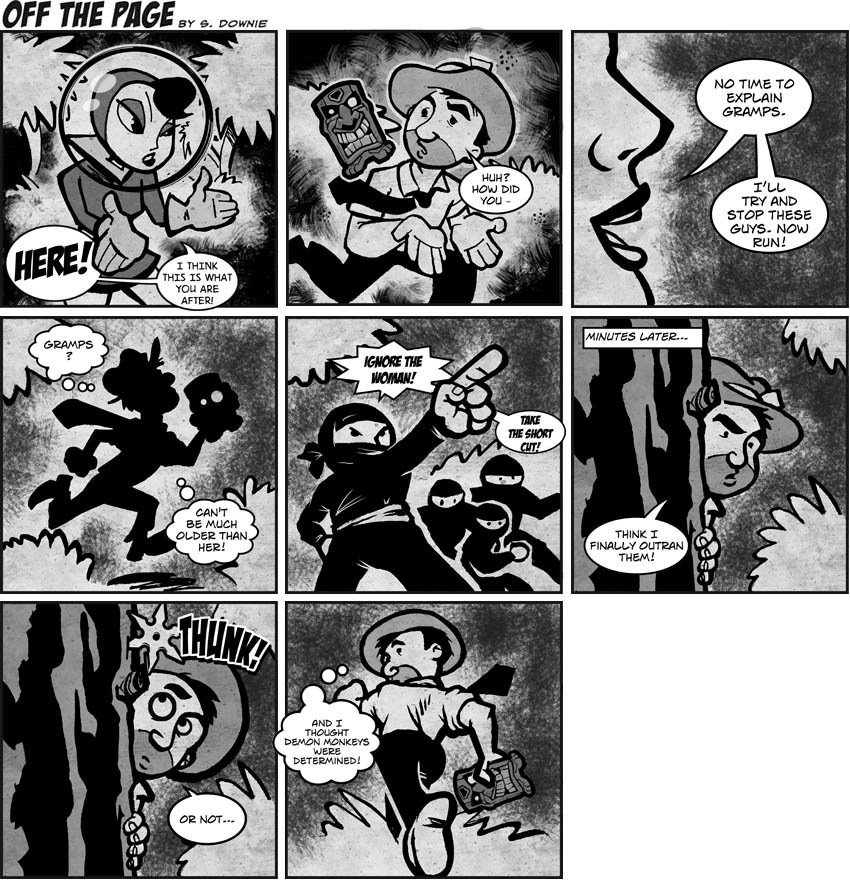
Well, this one page took waaaay too long to put together. The drawing didn’t take too long. I find the lettering to be a rather laborious task. And I kept putting it off. And it hasn’t been to hard to procrastinate as I’ve been working rather long hours at work and the weather this summer has been particularly good. Everything else I’ve posted this summer has either been had drawn or didn’t really take me much time at the computer to accomplish.

So to help me out a bit, I tried out Comic Life software by Plasq. Just a quick warning. There are quite a few sound effects and while cute, they quickly became annoying. It did help me out with the lettering, but I found the layout tools to be a bit too simple for my needs. So I think from here on in, I’ll keep to laying out the panels in Photoshop and the type will be composed in Comic Life 2.

Hopefully the next installment won’t be quite as long a wait.

Neanderthal

Just a quick post.

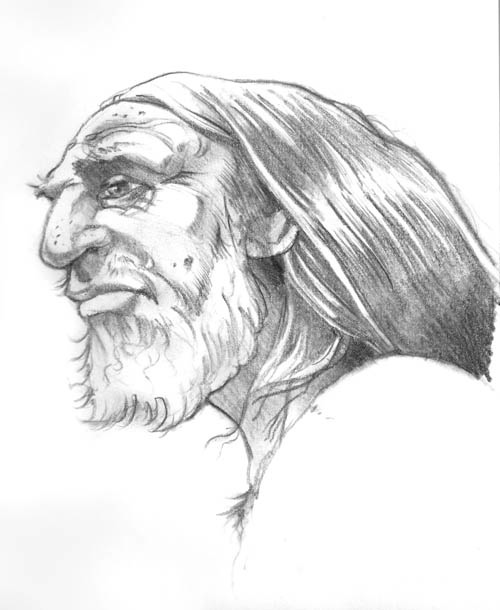
I’ve always been interested in human origins. So much so, I seriously gave thought to becoming an Anthropologist before becoming a graphic designer. Around the time I was a kid, some really ornate reconstructions were being made in clay. I guess that appealed to my artistic side.

Anyways, I threw this guy together over two evenings. I forgot how quickly I can put together a portrait in pencil.

I’ll apologize now to any working or aspiring Anthropologists who may come across this post. This work is mainly fictionalized and probably not as accurate as it could be. Maybe he’s a hybrid that science likes to theorize about from time to time. Especially now, as there is some good evidence a small percentage of Europeans may have a few Neanderthal genes in their DNA.

1 Comment

Rants and Raves

So on my last post, I said I had quite a rant forming regarding some of my conversations regarding ethical and business problems within the graphic design industry. While I’m not going to get into the exact details of any of my discussions at Secret Handshake (to save anyone any potential embarrassment – including me), I WILL try to lay out my thoughts regarding some of the issues that came up.

Spec Work, the Devil Everyone Knows

Spec work has always been quite a bugbear in the design industry. Spec work is basically doing some or all of a design as part of a bid for actually acquiring the job. It can also be used as a potential sales tool to drum up new business from prospective clients. You usually never recoup your losses from doing spec work. Most design organizations expressly forbid it. Just about everyone does it at some point in time though. It’s usually small companies that seem to demand it (either out of ignorance or malice – it can be a clever way to get good design for free or very little cost) but a few of the big guys often have it as a part of their bids as well. And what the 500 pound gorilla wants, he usually gets.

The debate over spec work has heated up over the recent years. With the rise of crowdsourcing websites and contest sites like 99designs becoming popular, the debate has gotten quite heated with everyone taking sides.

Me, I don’t mind spec work so much. You’ll never get rich doing contest sites like 99designs and you’d have to be careful to balance out paying work to spec work. While I do not like to talk about work too much on this blog, the company I work for does quite a bit of spec work. Maybe a bit too much as of late, but the concept works rather well for the lottery ticket industry. And besides, we’re primarily after the printing contracts for the lotteries rather than the design of it tickets itself, and that can get quite lucrative. Though not as lucrative as it has in the past…

So unless you’re after big multi-million dollar printing contracts, wherre taking a hit on the design end can still add up to big bucks further down the road, doing lots of spec work doesn’t pay. Or at least not very much. But it can lead you to future work that does. A tactic many young designers use to get noticed by agencies and studios is re-designing said agencies work the way you feel it should be done. Doesn’t always work, but I know a designer or two who got hired for doing just that. That’s basically spec work – you don’t ever get paid for that. And no guarantees of it working either.

I also find the tone (and many of the arguments themselves) similar to the ones used in the mid-nineties over royalty-free stock photography. Photographers were all up in arms about selling of their work to stock photography companies and not getting any royalties for any future sales. Before royalty-free, the only way to get photography was to set up a shoot with a photographer or sign complex contract agreements where a photographer (or illustrator) could get some nice residuals for each sale and use of a stock image. A few things have changed in that regard – for example, I don’t think anyone is selling CDs of images for only 60 bucks – and now many of these royalty-free places are considered legitimate places for photographers to get work. I wonder if there’s a way for these contest sites to change for the better… hmmmmmm…

And some of the other problems I have heard, like lack of good customer direction and input, I find rather questionable. As someone who has worked in the design trenches for years, I actually found the design briefs at 99designs rather refreshing. They were hardly perfect and still pretty bare, but way better than most I’ve had to deal with. Marketing people as a general rule are fairly obtuse by nature and many businessmen have few clues as to how to talk to creative people effectively. And if you work in a larger firm, it’s quite possible you won’t have any direct contact with the client anyways.

So while, my contact with contest siteses will and probably always shall be limited, all I can say to any designer is, “buyer beware”. And try to make certain you are balancing out the spec work with paying work. Have to keep the lights on and the belly full somehow.

The Devil You Don’t Know

Another interesting dilemma that is facing young designers these days is start-up companies looking for an investment rather that paying money for design. At first glance this looks worse than spec work. You are either donating your time for free on the hopes of cashing in big should the start-up succeed, or possibly even investing some of your hard earned money with, again, the hopes of cashing in big some point in the future.

For anybody in the design biz, you get pretty cynical quickly when it comes to the machinations of businesspeople. See? I even used the word machinations to describe them. Machinations is not a word you use when describing someone you trust. So even if some guy has an awesome idea for a start-up, you’ll find lots of designers will have a very negative view of such proposals. Not to mention not having much money to be investing. Designers (and other visual artists) are not always the richest of folk. And it sounds just too much like someone not willing to pay for design. Another clever way of getting something for nothing.

I would be one thing, if it was someone I knew and trusted well. Or maybe if it was a project I helped initially form (and therefore strongly believed in myself) rather than coming in mid-stream. Or perhaps a fun or cool project that would not take up too much of my time. Then I’d have some fun or at least an interesting story to tell. But otherwise, not for me. And not for a lot of other designers it seems as well.

Though as someone has pointed out to me, no reward for no risk…

Nah, still not interested.

The Cure for the Common Ill

So what to do about all this?

I think all of these are symptoms of one thing: lack of placing real value upon design in our culture. Regardless of all the cool looking gadgets and clothes Western people obsess about, nobody really like paying for design. Or at least not paying very much. That’s going to have to change. And that will take a lot of time. And it’s going to be up to all of us creative folk to help educate the public about what design is to our culture and why it’s important that creative people get compensated accordingly.

In the mean time, I think places like 99designs could change a few things they do that might make it more appealing for designers.

Number one, some sort of portfolio review before setting up an account. Even before such sites existed, the design community has had to deal with people who buy a computer with Corel Draw installed and call themselves a designer. This usually leads to lackluster work, gives all the rest of us a bad name, and reinforces the idea that design is expendable. The portfolio review wouldn’t have to be extensive. Or even have to have that high a standard. Just the fact that somebody would have to take the time to assemble a few items to prove they could design would weed out a lot of lazy people.

Number two, keep design submissions a secret. Everybody can usually see the designs as they are submitted (and can see customer feedback if any) and people are gaming that like crazy. Can you say shark infested waters? You let the people who submit first force the client to give feedback and more input, letting everyone else to benefit. I don’t think so. Private submissions will level the playing field and keep shenanigans down to a minimum.

Number three, guaranteed winners. Even if you don’t think anyone deserved to win, a contest without any winners is not much of a contest. The designers are taking a risk of not being paid. Only fair the contest runner has to take the risk of forking over a few hundred dollars for a design they might not care for. Besides, if the site really does have good designers, and you gave good inputs, you should have a fairly descent design in the end. Maybe one that might need a little tweaking after the contest, but hey, better than nothing right?

So until we get society on track to really value good design, good designers, and pay for it, maybe we should help get these contest sites become more designer friendly, rather than beating up young designers for doing the same things most of us older veterans do a lot more regularly than we would sometime like to admit.

Oh, and whenever there’s a local, public contest for a municipal logo or flag design, I think design groups and their advocacy groups should should simmer down a bit. These kind of contests are very rare, get the public at large interested in design, and designers come off sounding really whiny whenever we complain about them. Besides, I think everyone secretly thinks that the local designers who enter these things will win these over amateur submissions anyways. Just saying.

Rant over.:)

1 Comment

Domo Arigato Mr Roboto, or Secret Handshake, The Summer Edition

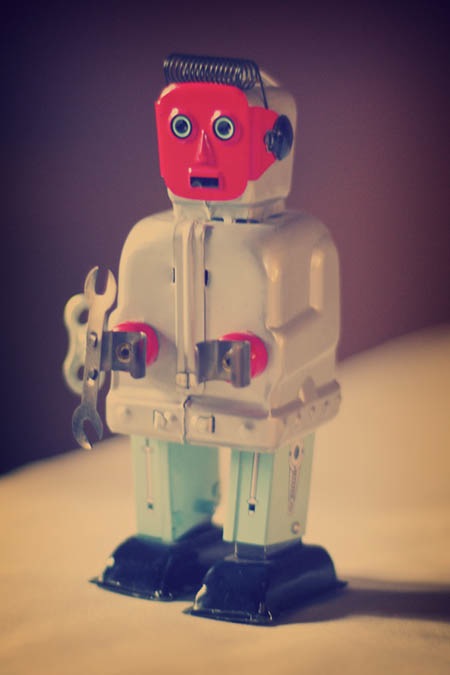
I just want to start off saying that I got a cool wind up robot. And YOU didn’t!  😛

So it was off to The Secret Handshake once again.

This time it was a little downbeat for me. According to the news, the youth hostel that the Lo Pub is attached to (the usual hangout for The Secret Handshake) will be closing down, taking the Lo Pub with it. A shame really as the food is quite good and at a reasonable price. The atmosphere is quite cool as well. Sounds like everything will remain open until the building is sold. That means for the rest of the summer it should still be open. Also means I should have some time to take Kimmy to this place. She hears me rave about this place, but she’s always busy on Thursdays, so I never get the chance to take her.

Since I was going to be downtown, I took the opportunity to check out Book Fair Comics, a used bookstore and comic shop. Last Christmas, Kimmy got me the first book in the Dirk Pitt series of books by Clive Cussler. Since I enjoyed the first one, I thought I’d give the rest of the series a try. It’s a very long series and some of the books are quite old, so I thought I’d give used bookstores a try to track down the older books at reasonable cost.

The store had some of the older books, but I thought the prices were a bit too high for used books. Didn’t stop me from picking up a few of the titles though. And an interesting looking book on someone’s theory of the historical King Arthur. Sounds like a fun read.

And then off to Secret Handshake.

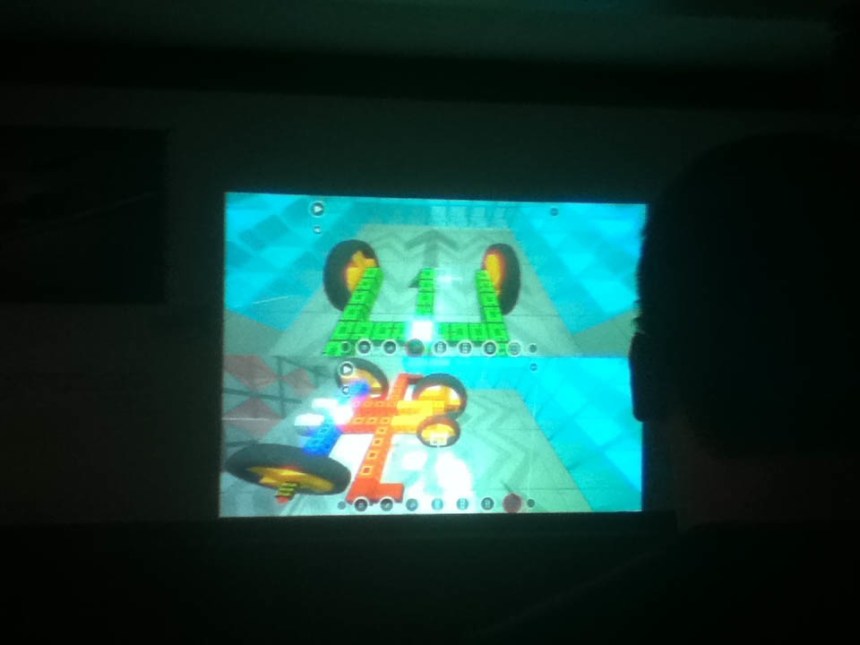
This time around there was a demonstration of an indie video game a few local developers were working on. Roboteer. Basically, it’s an educational game to help get students interested in robotics. You build virtual robots out of pieces that look like a combination of lego and old erector set pieces. You then can try them out in different puzzle type games that have different challenges set out for you. Most of the challenges seem to involve collecting tokens while navigation obstacles and different terrains that will challenge your robot designs. You can play individually or head to head competitions where the competition usually devolves into a flurry of electronic mayhem!

I got a chance to talk to one of the developers, one Mickey Blumental. Basically, the game was built using Unity 3D. It’s been a 4 month project (give or take) with LOTS of man-hours thrown in. The game is basically done. All that’s left is code optimizations to get everything to run smoothly and more levels to be designed. He was really enthusiastic and clearly had LOTS of energy as he kept going back and forth between the two different stations they had set up. And you could tell he was really excited to be there and was VERY patient while letting me demo the game.

I am not a gamer. At least not the button mashing variety. When I was a kid I did play an awful lot of Gorf on my old Vic-20, but that game used a iconic joystick controller every child of the 80s should be familiar with. I also played a lot of the old text adventure games by Scott Adams (most notably, Adventureland). I even actually wrote a few text games myself. Otherwise, beyond a brief love affair with Doom and an even briefer on with some version of Quake, I’ve managed to avoid most of the video game craze. So you can well imagine how I must faire compared to a room full of twenty-somethings that grew up on SNES and Playstation.

But pathetic or not, my brief attempt to be one of the cool kids did let me have a chance for a draw at the end of the evening. Where I did in fact manage to make off like a bandit. I got a cool little wind up robot, a t-shirt with the game logo on it (the shirt just barely fits – time for a diet) and a sound track for a game the other developer, Alec Holowka, put together for his award winning game, Aquaria. The CD, I was pleasantly surprised, was quite good. I also received a download code for said game, but alas, it’s iPad only (in the noise at the Pub I thought he said “iPod”), so unless this is the excuse I need to actually buy one, I won‘t be playing the game any time soon. Hmmmmm… I wonder if I know anyone who’d be interested… If the game is one tenth as good as the CD, it should be a pretty good game to play.

The rest of the evening could be summed up with ethics in business and design. I would elaborate futher, but I think it’s shaping up to be a rant worthy of it’s own post. So stay tuned!

Image of the Month – July

Early this month. Which is more than I can say for my web comic. It’s coming, though slowly. The weather outside it waaay too nice out and I’ve also been working quite a bit of overtime lately. Doesn’t leave much time for working on the old computer after hours.

Anyways, this is a colour of a black and white image I did a few months ago. And while I wouldn’t call it outright theft, I did borrow rather extensively the colour scheme from a certain well know robot that shall remain nameless. Besides, what did Picasso say? Good artists borrow, great ones steal?

I had quite a bit of fun with all the reflections on this one. And it didn’t take very long to do either. Enjoy!

It’s Official, Now on deviantArt!

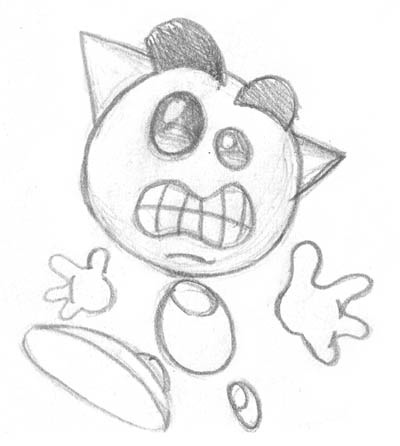
For good or for ill, I am now officially on deviantArt.

According to my sketch, it looks like for ill 🙂

I’ve been thinking of joining for a while, and decided to take the plunge. There’s not much posted right now. And everything posted there can already be found on this site.

I can be found using the handle FromThePeg.

Wolverine

Simple line art drawing scanned into the computer. Lines cleaned up in Photoshop. As for the colour scheme, I’m a child of the 80s, so to me, this is the definitive Wolverine costume. Though I do not mind the current blue and yellow one he’s sporting now.